Subscribe to out newsletter today to receive latest news administrate cost effective for tactical data.
2478 Street City Ohio 90255


Please feel welcome to contact our friendly reception staff with any general or medical enquiry call us.
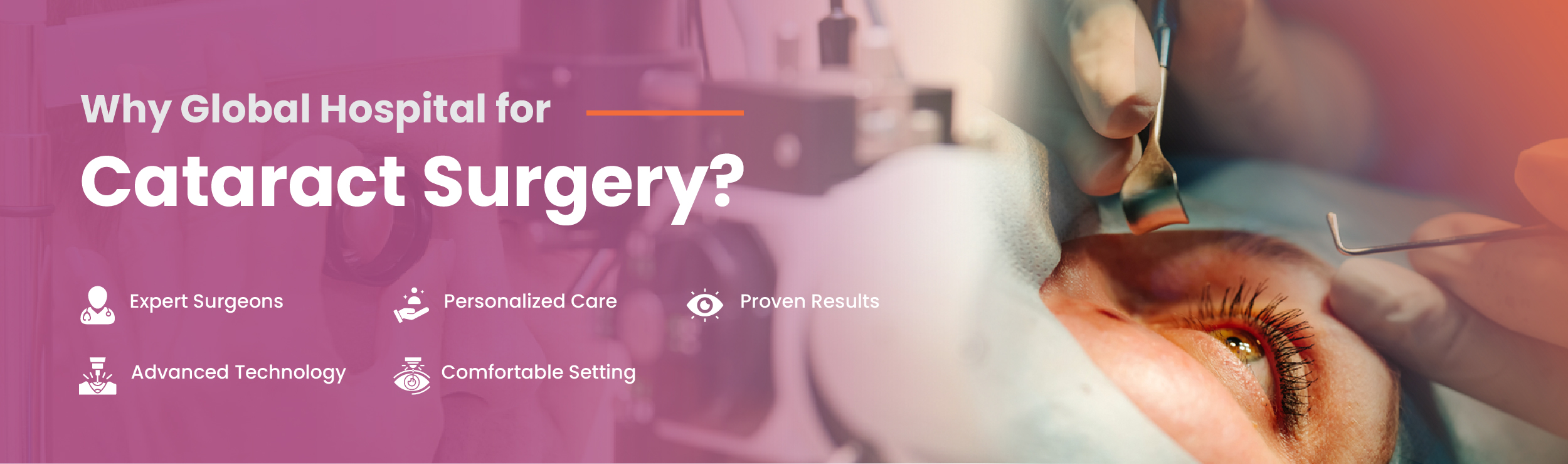
Cataract Clinic at Global Hospital, Pune diagnoses and treats cataracts using minimally invasive surgery and premium intraocular lenses (IOLs), led by Dr. Vijay Desai, MBBS (Ophthalmology). The clinic also manages glaucoma and diabetic retinopathy, so patients with overlapping eye conditions don’t need a separate referral.
A cataract is a clouding of the eye’s natural lens that causes blurred, hazy vision, and develops gradually over months or years. It’s one of the most common age-related eye conditions and, left untreated, can progress to significant vision loss — but cataract surgery has a very high success rate at restoring clear vision.
Anyone noticing two or more of these symptoms should get an eye exam — cataracts don’t reverse on their own, and earlier evaluation means more lens options and an easier recovery.
Risk Factor | Why It Matters |
Age over 60 | Cataracts are largely age-related and become more common with time |
Diabetes | Elevated blood sugar accelerates lens clouding |
UV exposure | Long-term sun exposure damages the lens over time |
Smoking | Increases oxidative stress linked to cataract formation |
Prior eye injury or surgery | Can trigger earlier-than-usual cataract development |
Long-term corticosteroid use | Steroid medications are a known risk factor |
Cataract surgery removes the eye’s clouded natural lens and replaces it with an artificial intraocular lens (IOL), restoring clear vision in a procedure that typically takes under 30 minutes per eye. Global Hospital offers a range of premium IOLs tailored to near or distance vision correction, along with minimally invasive techniques that reduce discomfort and speed recovery.
Benefits of cataract surgery:
Most patients notice improved vision within a few days, with full stabilization over several weeks.
Specialist in
Cataract Surgery
Glaucoma Management
Retina and Diabetic
Retinopathy Screening
Daily Availability: Mon, Fri, Sat
12:30 PM to 2:30 PM
Cataracts only progress with time — earlier treatment means more lens options and an easier recovery. Book a consultation with Dr. Vijay Desai for a full eye evaluation.
Q: How do I know if I need cataract surgery?
A: Cataract surgery is usually recommended once clouded vision starts interfering with daily activities like reading, driving, or recognizing faces, rather than at a fixed severity level. An ophthalmologist confirms this through a dilated eye exam.
Q: Is cataract surgery painful?
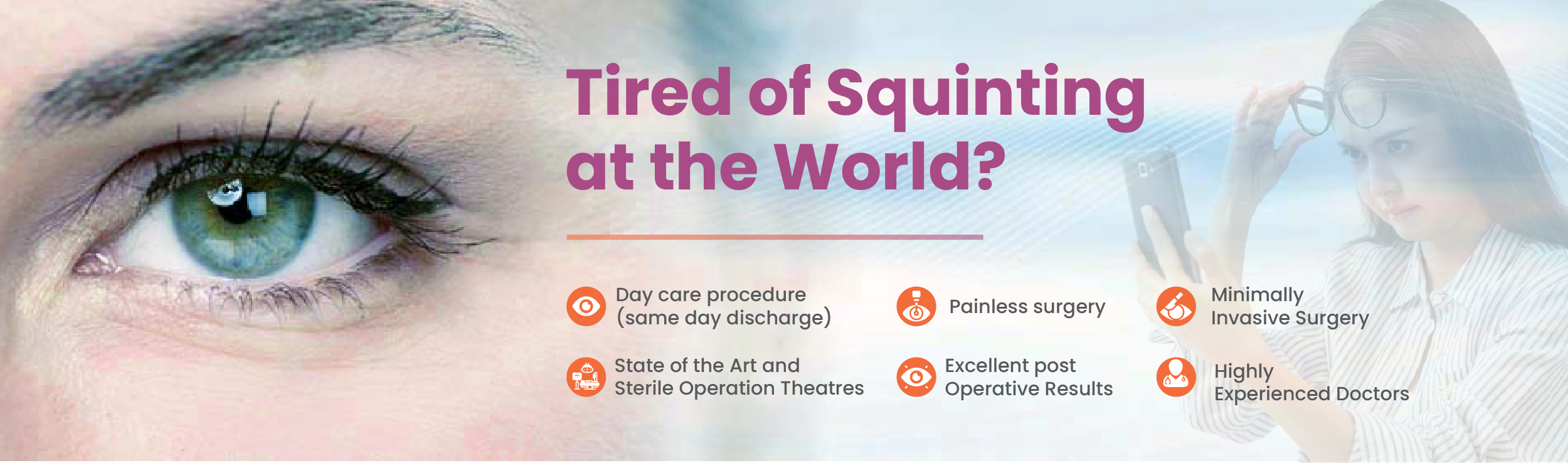
A: No — cataract surgery is performed under local anesthesia (eye drops or a numbing injection), so patients don’t feel pain during the procedure, though they may feel mild pressure. Most patients report only minor discomfort in the days after surgery.
Q: How long does it take to recover from cataract surgery?
A: Most patients notice improved vision within a few days and can resume normal activities within a week, though full visual stabilization can take four to six weeks. Strenuous activity and heavy lifting should be avoided during the initial recovery period.
Q: Can both eyes be treated at the same time?
A: Cataract surgery is typically done on one eye first, with the second eye treated a few weeks later once the first eye has healed. This staged approach lets the surgeon confirm the outcome before proceeding to the second eye.
Q: Does diabetes affect cataract surgery?
A: Diabetes increases both the risk of developing cataracts earlier and the need for careful blood sugar control around surgery, but well-managed diabetic patients generally have good surgical outcomes. Diabetic patients often also need retinopathy screening alongside cataract evaluation.